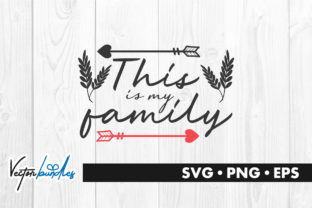
Reviewing This is My Family Embroidery Design
As a designer who spends half my day in Cricut Design Space and the other half judging stitch quality on finished garments, I approach every new digital asset with a mix of hope and skepticism. The market is flooded with generic clipart, so finding a design that actually translates well from screen to fabric is rare. Today, I’m breaking down This is My Family, a graphic file available in SVG, PNG transparent, and EPS formats. While it’s categorized under Crafts and Graphics, its real value lies in how it performs as a machine embroidery design for real-world projects.
First Impressions: Mood and Visual Personality
When you first unpack the zip file containing the SVG, PNG, and EPS versions of This is My Family, the immediate takeaway is its versatility. The title suggests an emotional connection, which is exactly what successful personalized gifts rely on. Visually, the layout feels balanced and warm without being overly cluttered. For a designer, this is crucial. If a design is too busy, it becomes a stitching nightmare; if it’s too sparse, it lacks impact on a finished product.
The visual personality of This is My Family leans toward classic and sentimental. It doesn’t scream for attention with neon colors or chaotic shapes. Instead, it offers a clean, readable aesthetic that works beautifully for family reunions, baby showers, or holiday gifts. As an embroiderer, I appreciate when a design respects negative space. This allows the thread work to breathe, ensuring that the texture of the stitches—whether satin or fill—becomes the star rather than fighting against tiny, intricate details that might get lost in the hoop.
Real-World Application: From Screen to Stitch
Let’s talk about where this design truly shines. In my recent workflow, I was preparing a batch of custom embroidered tote bags for a local craft fair. These items need to be durable, visually striking, and easy to produce. This is My Family fits perfectly into that niche. The vector precision of the SVG format ensures that when I scale the design up for a large tote bag front, the edges remain crisp. There is no pixelation, which is a common issue with lower-quality raster files.
I also tested the concept on sweatshirts for a boutique client. The phrase lends itself naturally to chest-area placement or centered back designs. When stitched onto heavier fabrics like cotton blends or fleece, the design holds its structure well. However, the success here depends heavily on your choice of thread colors. A soft pastel thread on a heather grey sweatshirt creates a subtle, premium look, while high-contrast black on white offers a bold, streetwear vibe. The flexibility of having multiple file formats means I can easily adapt the design for different branding needs, whether for a small shop product or a large-scale commercial embroidery run.
Beyond apparel, this design is a strong contender for home decor. Imagine it embroidered on a linen tea towel for a housewarming gift, or on a pillow cover for a nursery. The emotional resonance of "family" themes drives sales in these categories because buyers are purchasing sentimentality, not just fabric. For Etsy sellers and creative entrepreneurs, this kind of recognizable, heartfelt imagery reduces the friction in the buying process. Customers see it and immediately understand the gifting potential.
Where Caution Is Required
No design is perfect for every scenario, and This is My Family has specific constraints that designers must respect. First, consider the hoop size. If the design contains fine lettering or delicate decorative accents, placing it in a very small hoop may result in distortion or missed stitches. Always check the dimensions before locking the fabric.
Fabric choice is equally critical. Avoid using this design on highly textured fabrics like bouclé or thick waffle knits unless you are experienced with stabilizers. The needle penetration might be inconsistent, leading to puckering. Similarly, stretchy fabrics like thin spandex blends require careful hooping and potentially cut-away stabilizer to prevent the design from warping after washing. Dark fabrics can also pose a challenge; if the design relies on light threads for detail, visibility may suffer. Always test on scrap fabric first to evaluate contrast and stability.
Another area requiring care is curved surfaces like caps or hats. While the design looks great on flat planes, transferring it to a curved brim or crown requires precise digitizing adjustments. If the original file isn’t optimized for 3D structures, the text may appear distorted when viewed from the side. For embroidered patches intended for iron-on application, ensure the backing material complements the density of the stitch density used in the design.
Technical Considerations for the Pro Designer
Receiving the package with SVG, PNG transparent, and EPS files is a significant advantage. The SVG is ideal for direct import into cutting software like Silhouette or Cricut Design Space, allowing for quick prototyping. The PNG transparent version is excellent for creating printable mockups to showcase your finished product on e-commerce platforms without needing physical samples for every color variation. The EPS file serves as a robust vector source for any advanced editing in Illustrator or CorelDRAW, giving you full control over line weights and shapes before digitizing.
However, having the files is only step one. As a reviewer, I must emphasize the importance of checking the underlying digitization if you are importing an actual embroidery file format (like PES or DST) derived from these vectors. If you are using the SVG directly for applique or vinyl, the layer separation matters. For machine embroidery, inspect the satin stitch paths for smooth curves and ensure the fill stitch areas have appropriate underlay to anchor the top thread. Poorly executed underlay can lead to thread breaks and messy backsides, which instantly lowers the perceived value of your handmade product.
Also, consider the licensing terms. Even though the file formats are compatible with many software programs, commercial use rights vary. Before listing this design on your Etsy shop or using it in client projects, confirm whether you are allowed to sell the finished goods. Many digital product sellers make the mistake of assuming file access equals commercial license. Protect your brand consistency by verifying these details upfront.
Final Verdict: Is It Worth the Investment?
For embroidery designers, small business owners, and hobbyists looking to expand their catalog, This is My Family is a solid addition. It strikes a balance between emotional appeal and technical feasibility. It works exceptionally well for personalized gifts, custom apparel, and boutique branding where warmth and authenticity are key selling points.
Its strength lies in its adaptability. Whether you are creating a single heirloom piece for a friend or producing fifty units for a holiday market, the design scales effectively. The inclusion of multiple formats means you aren’t locked into one workflow. You can switch between cutting, printing mockups, and stitching based on the project demands.
To maximize its potential, focus on execution. Choose high-quality threads that complement the mood of the design. Use the right stabilizer for your fabric type. And always, always run a test stitch. By paying attention to these practical details, you transform a simple graphic into a professional, high-value embroidered item that customers will cherish. This is My Family isn’t just a file; it’s a foundation for meaningful, profitable craftsmanship.